5 ways to use EPIC Analytics to head off district deficits
Grants gained or lost. Funding changes. Student migration. Capital projects. The challenges never end in K-12 funding. Discover why EPIC Analytics is a district CFO’s best friend.
--
Being a finance officer in K-12 education can be a lonely role. As Jamie Cowan knows from experience, “the finance person is often one of one” — science teachers have coworkers in their building, principals likely have peers in their district, but for CFOs, there’s no one to provide that all-important gut check.
Cowan first became involved with district finances after being a school auditor in public accounting for many years. In switching roles, she soon found herself called in to support a district with a deficit of several million dollars. She says, “It was the first of its kind where we were putting together a consent agreement with the state, the banks, the ISD, the district themselves, and the Department of Treasury.” With her help, the district was able to create a multi-year plan and get back in the black. Through that experience, “I was able to develop a lot of relationships and techniques around solving the problems of deficit districts,” so she worked directly for school districts, both with and without deficits, and now serves as the assistant superintendent of business and finance at Swartz Creek Community Schools in Michigan.
Cowan has leaned on EPIC Analytics (formerly known as the Finance application) to help multiple deficit districts rework their spending and rebuild their fund balance. Whether a district is already in deficit or proactively working to avoid it, Cowan points out five critical benefits you can gain from using a tool like EPIC Analytics.
Validate your assumptions
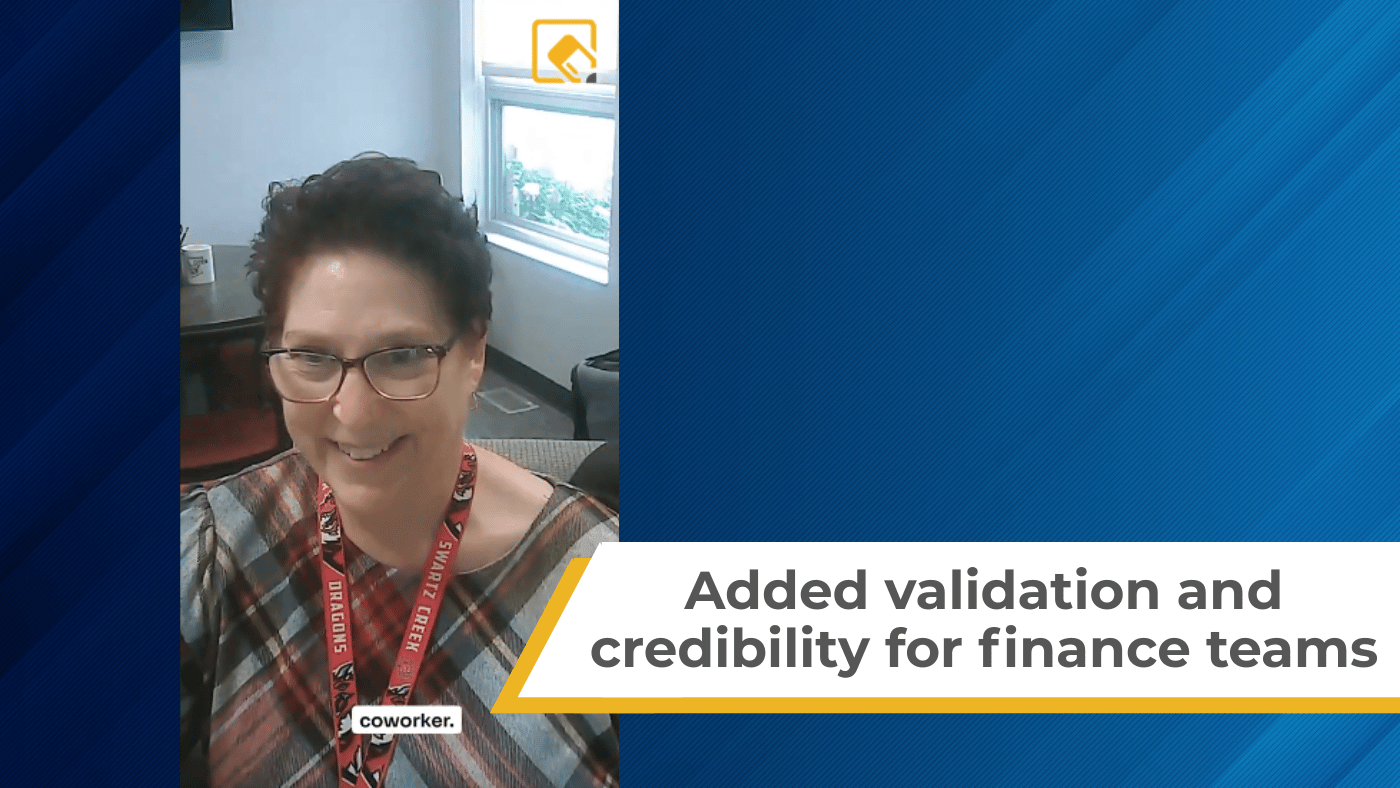
The first step for Cowan in recovery activities is simply confirming the data in front of her — she knows if the deficit or other finding “was a surprise, I can’t necessarily start with what I’ve been given. What records do I have that led up to this?” With everything in the platform coming directly from a trusted public source or the district’s own Student Information System, Cowan says, “SchoolData gives me an instant reasonability to my own work, as well as a lift to get the work done.” It also helps her back up her conclusions with the “added credibility that comes from an outside entity.”Benchmark against peer districts
Cowan’s next move is to determine a peer group for the district. The right districts for comparison may not be the ones next door, but the ones who are of similar size and have the same proportions of students with free and reduced lunch, high-risk, or special education needs. She advises districts to “pick some key drivers: What is driving the cost? what is the identity of this district?” and which districts are dealing with similar patterns? When administrators can see comparable districts who are turning their finances around, Cowan says, “we wonder, How are they doing that? And that curiosity really does spark involvement.”Plan for the long term
“Long-term, multi-year budgeting should be the norm,” Cowan says. But in states that only mandate a single-year budget, “the thinking is, if it’s not required, it must not be necessary.” Cowan would argue that if districts are offering things like four-year contracts to educators — a move that makes sense and “adds stability” to district operations — they should also “have four years to know in advance of that agreement that you could afford that offering.” Districts need a tool they can use to easily project income and costs over multiple years, “even if it is based on future assumptions.”Test multiple scenarios
Cowan recommends that “nothing be off the table” for administrators when strategizing ways to correct a deficit or avoid one. Getting your district back in the black might come down to a single solution, like a reduction in workforce, or it could just as likely be “10 little things that add up, such as re-evaluating service contracts or redistricting.” It’s critical in this testing that districts have a way to “manipulate that data” while also “safeguarding the math” from potential errors. When you can make one budget yet apply tweaks that automatically forecast the impacts of different cost-saving options, you can make informed decisions about the best path for your district’s unique circumstance.Support informed collaboration
With all your data “on a common platform,” it becomes a much easier lift to create “visuals for all the stakeholders, whether it be your internal admin team, your board, or the public.” Presenting a data visualization from EPIC, like a diverging analysis of expenditures or a trendline of student migration, is especially helpful because it “layers the conversation,” Cowan says. “Not only is it clearer and visualized, but it supports” and adds context to your budget proposals. Cowan also appreciates that because it’s a district-wide subscription, her colleagues can “play around” with the data and contribute their own ideas for solutions — “it invites everybody to the conversation.”
While Cowan is quick to point out that Swartz Creek is not a deficit district, she says “the game is the same. Understanding what you can cut, what you have, and what everybody else is doing is vital information for any district, any size, any time.”
Because “we always have something challenging in front of us in K-12,” CFOs need more than just data. They also need to be empowered to trace their data to reliable sources, compare it with peer districts, make it accessible to stakeholders, and “run through all the scenarios, faster.” For all those activities, she concludes, “The tool is SchoolData.”