For Dr. John Tafelski, Superintendent of Royal Oak Schools, school leadership isn't just about collecting data—it’s about having usable, specific information that drives instructional improvement.
"I'm a big formative assessment guy,” he says, so his ideal assessments generate “quick, specific data that tells us where our kids need to improve, how we can improve, and what we need to do to help support our students."
The challenge: Monitoring students manually
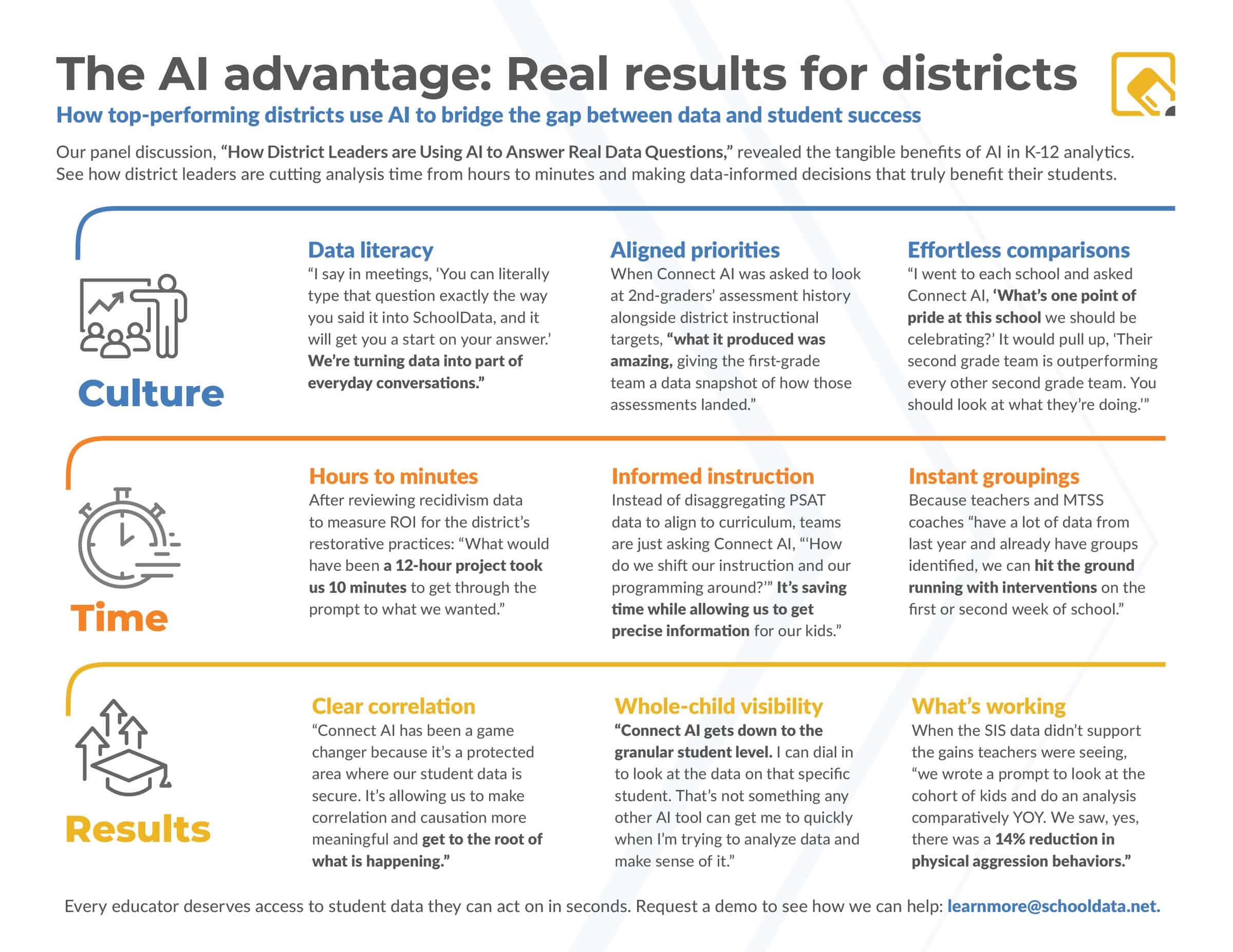
Before integrating AI into the district's analytics, the process of aligning assessment performance with curriculum standards was manual and labor-intensive. "Before AI, I was all Excel all the time (for all of my VLOOKUP friends out there)," Dr. Tafelski recalls. Administrators would spend hours disaggregating data to identify gaps, often struggling to determine if the district’s instructional programming actually matched the standards tested on assessments.
Tafelski became an early adopter of AI for school data analytics, but was very aware of the dangers to student privacy. By the time he’d removed all personally identifiable information for the students, then fed the generalized data into Claude, he was forced to ask himself, “Are you actually saving time if you're stripping all of the information out of it and then adding the information back into it?” He knew there must be a way “we can be more precise” with targeted data inquiries that yield useful results.
Tafelski describes why SchoolData is the first line item in his budget every year.
The breakthrough: AI as a precision partner
The district began using Connect AI from SchoolData to analyze longitudinal gaps, comparing embargoed test data with iReady results. By inputting this data into a secure AI environment, the district identified specific math sub-domain gaps. The results were immediate and actionable: Sixth- and seventh-grade teams were able to realign their units and add enrichment standards before the start of the next term.
"Taking this leap with AI—though it's not really a leap because we were already doing it—and having the ability to have it all in SchoolData makes everybody a little bit more efficient."
— Dr. John Tafelski, Superintendent, Royal Oak Schools Key benefits for district administrators
Precision Instruction: AI analysis quickly identified that certain standards weren't being taught until too late in the sixth-grade year, directly informing adjustments to the curriculum.
Efficient Workflow: Instead of waiting for universal screeners, teams were able to identify student groups and start targeted interventions within the first two weeks of school.
Purpose-Driven Results: Rather than just generating "data for data's sake," the district focuses on specific prompts to answer critical questions about curriculum effectiveness.
Connect AI is changing the way the school year starts for Royal Oak, informing interventions from the very first weeks of school.
Learn more about Royal Oak's story and the integration of Connect AI into district culture as part of our panel discussion, "How District Leaders Are Using AI to Answer Real Data Questions." Watch the full playback here.