Part 1: Building a data culture in your district
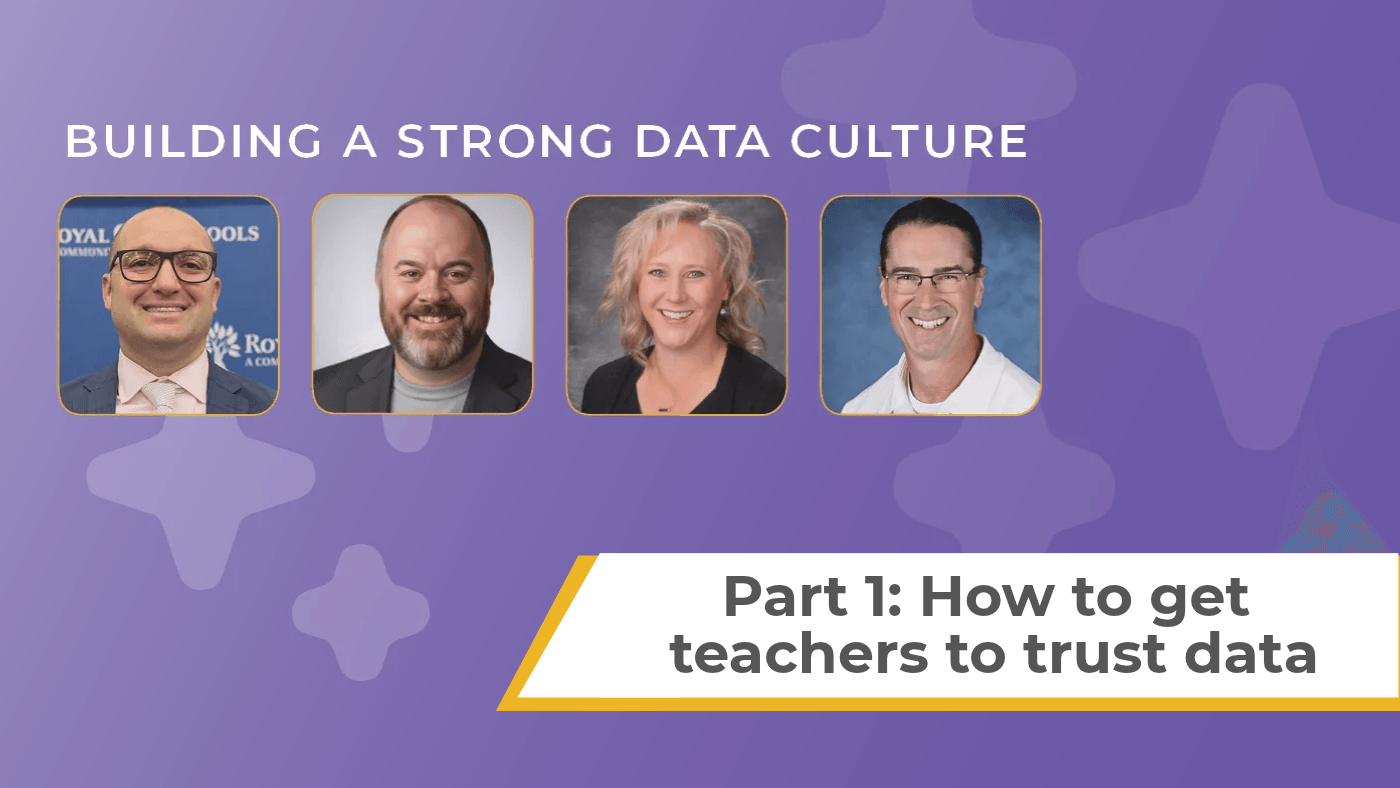
About the series: Districts have long talked about developing their data cultures, but it takes more than talk to fully integrate data into educators’ daily decisions. A data culture, simply put, is one where educators feel safe asking questions of their data, get answers quickly, and share and apply the insights to help students. In this series, we’ll gather advice from leading educators across the country about how to advance your data culture, whether your district is just getting one off the ground or already reaping the rewards of data reliance at all levels.
Laying the foundation
When a data culture is in its infancy, data tends to be something that happens to teachers: results arrive from the central office, finding data is the domain of a few specialists, and most staff see numbers only after the decisions have been made. Three things make the difference between that starting point and a culture teachers actually want to join: trust in who is presenting the data and why, easy access to answers, and visible impact in the classroom. How can district leaders ensure that the foundation of their data culture is secure and worth building on?
Why does trust come first?
“From a teacher’s standpoint, who’s providing the data changes the whole culture,” says Gunnar Guttormsen from Kelso School District. If assessment directors like him or principals or instructional coaches are the ones presenting data about student performance, about standards-based assessment, for example, then teachers may assume their work is under scrutiny. But when teachers with a question can easily get an answer themselves, Guttormsen has found they are much more likely to “lean into understanding that data.”
“We had to create a culture where people had that self-efficacy for data.”—Andy Langlois, DeKalb CUSDIn too many districts, teachers have learned to see data as a tool that’s used to inform their performance reviews. Andy Langlois, data strategist for DeKalb CUSD, for one, describes his former data culture as “evaluative. It was how we were measuring people, not learning and growth.” Before teachers can be expected to embrace data analysis, Langlois says, administrators need to “socialize data so it no longer becomes deeply personal. We strove to make data not the signposts, but the landscape.” When administrators and teachers are—regularly and collaboratively—talking about data to strategize on student interventions, teachers start to drop the defenses and put the data to work increasing student growth.
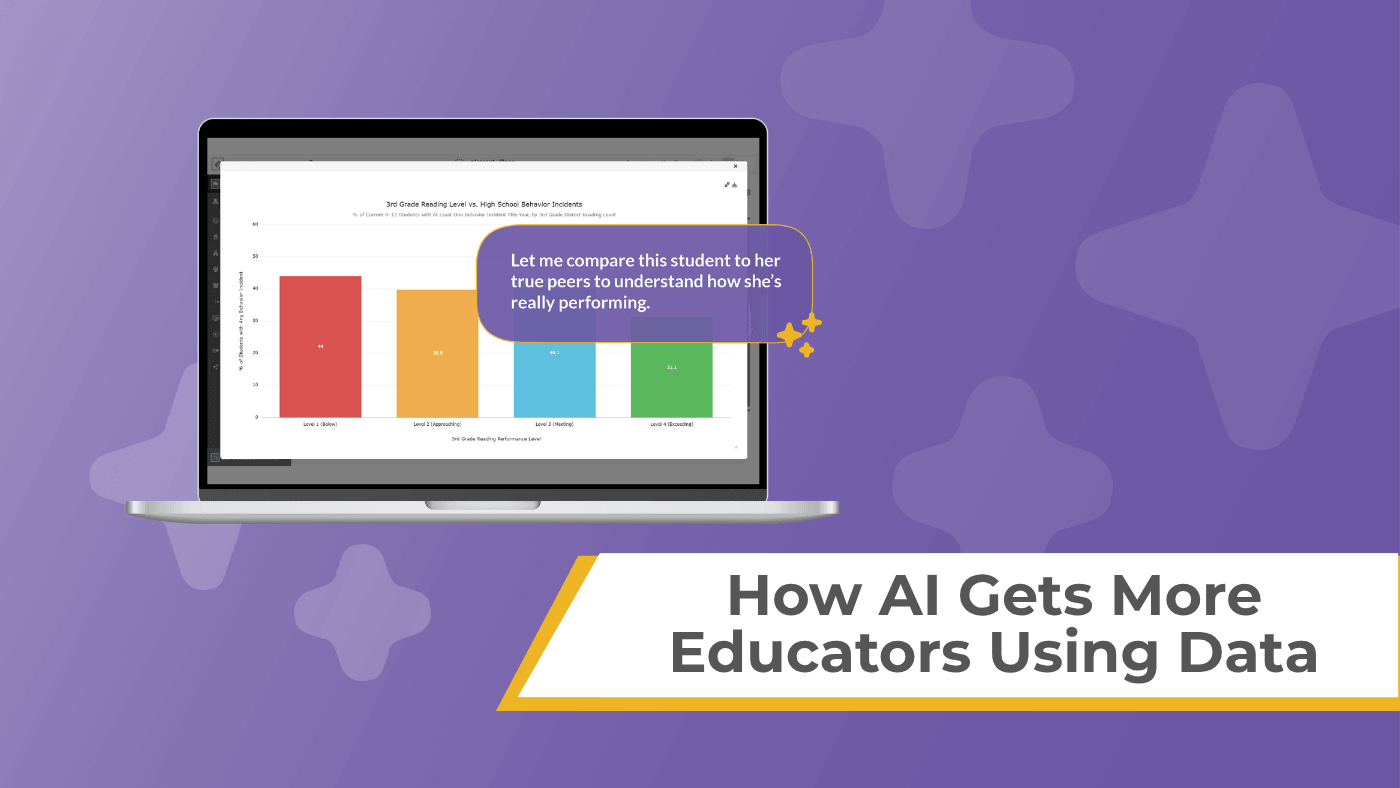
You can facilitate more of those conversations, according to Dr. John Tafelski, superintendent of Royal Oak Public Schools, with shared data dashboards that support “good instruction and good conversations in our classrooms.” But while dashboards highlight important data, they don’t always answer the bigger questions educators have. For example, Tafelski took his laptop into meetings with each of his school improvement teams and asked Connect AI, SchoolData’s AI assistant, “What’s one point of pride at Keller Elementary that we should be celebrating with the data that you have available? It would pull something up in each one, like, Their second grade team is outperforming every other second grade team.” This kind of positive reinforcement turns data from a punitive yardstick into a practical lever that benefits teachers as much as it does administrators.
Teachers also need to know which AI tools can be trusted with student data. Tafelski originally experimented with AI by anonymizing spreadsheets of data before feeding it to an agent like Claude, a process that provided insights but felt inefficient: “Are you actually saving time if you're stripping all of the information out and then adding the information back into it?” he wondered. It’s why Tafelski has welcomed Connect AI as “an AI tool that I can go back and forth with,” knowing he’s in a contained environment “where our data is safe and secure.”
How do you make data easy enough for teachers to use?
Even when data has become part of “the landscape,” in Andy Langlois’ words, and teachers are open to consulting it, it can still feel like one more task in an already demanding schedule. But Langlois can point to cases where AI helped him turn what would have been a 12-hour inquiry — referencing “five different discipline reports, a lot of VLOOKUPS, index matching, and a bunch of pivot tables” — to a task that only took “about 10 minutes” from the initial prompt to the answer. The ability for every educator to move, in moments, from a question about their class to identifying and grouping students in need is what makes data easy enough to consult everyday.
To get her teachers comfortable working with the AI initially, Aimee Larsen, the director of data-driven response for West Ada School District, provided a bank of common prompts staff could choose from. With those pre-scripted prompts, “we've been able to focus the conversations” to ensure both teacher success and alignment with the district’s instructional initiatives. Educators are free to pose their own questions to AI — the prompt bank is just a helpful scaffold, says Larsen, while they’re learning “how to build a quality prompt.”
Langlois uses the AI agent itself to complete teachers’ training: after they get to the desired result, he advises educators to ask AI to “write you the prompt back, and save it. Then in November, ask it again to see how you're doing mid-year.” By facilitating easy access, district leaders can turn data into a tool that teachers return to on a regular basis.
How do you show teachers a quick win?
Empowering teachers with easy access may set the stage for data engagement, but the best way to turn teachers into data advocates is to demonstrate impact. AI assistants let teachers go from raw data to simple classroom adjustments that yield outsized improvement in student results.
“For us, the AI tool dissolved the data literacy barrier.”—Aimee Larsen, West Ada SDDr. Tafelski describes a scenario where he directly asked the AI assistant, “What does our i-Ready data say about gaps, so we can modify delivery to avoid those gaps” ahead of the fall state assessments. The answers clearly identified where there might be deficits in instruction, so “I gave that to my sixth and seventh grade team over the summer, and they realigned their units based on what the data showed.” The Royal Oak team is still refining prompts to elicit “the best data to give to teachers to say, ‘You’re already teaching this, you’re just teaching it out of order,’ or ‘You’re moving on too fast from this.’” But the ease of querying AI in simple language and enlisting its help to refine the prompts means that “we're making those changes pretty quickly.”
Aimee Larsen helped her first-grade teachers examine the clarity of their lessons. After the district’s AI tool analyzed second-grade assessment scores and first-grade curriculum, it produced insights that were “really amazing in terms of giving this first-grade team a data snapshot of how those assessments landed... as well as instructional recommendations of where they could tweak.” Larsen knows that many teachers find it difficult to “correlate the data to specific instructional practices. This prompt produced very actionable items that they could reproduce in the classroom tomorrow.” As teachers apply these tweaks and see student understanding grow, it only whets their appetite for more impactful data.
Making data something teachers reach for
Larsen puts it simply: “For us, the AI tool dissolved the data literacy barrier.” While she acknowledges that it takes time to get people on board with new technology, she believes it’s worth it for the way AI “expedites our work. We just never have enough time.” But she’s already seen that as they query student data via AI, her colleagues are “saving time in a lot of other ways that are meaningful to students.”
Langlois also has sympathy for teachers and principals whose ability to engage with data competes with “the nine million things they have to do during the day." They may wonder about trends in student performance, but without easy access to trusted analytics, they can’t capitalize on those hunches. It’s why AI became such a critical tool in the district’s development, he says: “we had to create a culture where people had that self-efficacy for data.” AI has helped make data something every educator can get familiar with — and get behind.
Frequently Asked Questions
1. How do you get teachers to trust data?
Separate data from evaluation, then make it easy for teachers to get their own answers. In the districts in this series, trust grew when data stopped being used to judge people and started being used for learning and growth, as in Andy Langlois’s district. It also helps when teachers can look things up themselves and come away with relevant insights: Aimee Larsen notes that her district “dissolved the data literacy barrier” once teachers learned AI could provide “actionable items that they could reproduce in the classroom tomorrow.”
2. What is data literacy for teachers, and how do you build it?
Data literacy for teachers is the ability to ask a useful question of student data, understand the answer, and decide what to change in teaching. Districts in this series build it by lowering the technical barrier first. West Ada gave teachers a bank of ready-made prompts to start from, then encouraged them to write their own. Langlois has teachers ask the AI to write a successful prompt back, save it, and run it again mid-year to see how they’re doing.
3. Can teachers trust AI answers about student data?
Teachers can treat AI answers as a strong starting point, but they should check them before acting. Langlois’s rule is “trust but verify”: AI is a partner, but it has neither the educational background nor the in-classroom experience that people do. In practice, ask whether the answer matches what you already know about the students, ask follow-up questions of the AI, and compare it with another source before making a decision about next steps.
Looking for a safe and easy way for your staff to query their student data? Schedule a personalized demo of Connect AI for your district leaders.