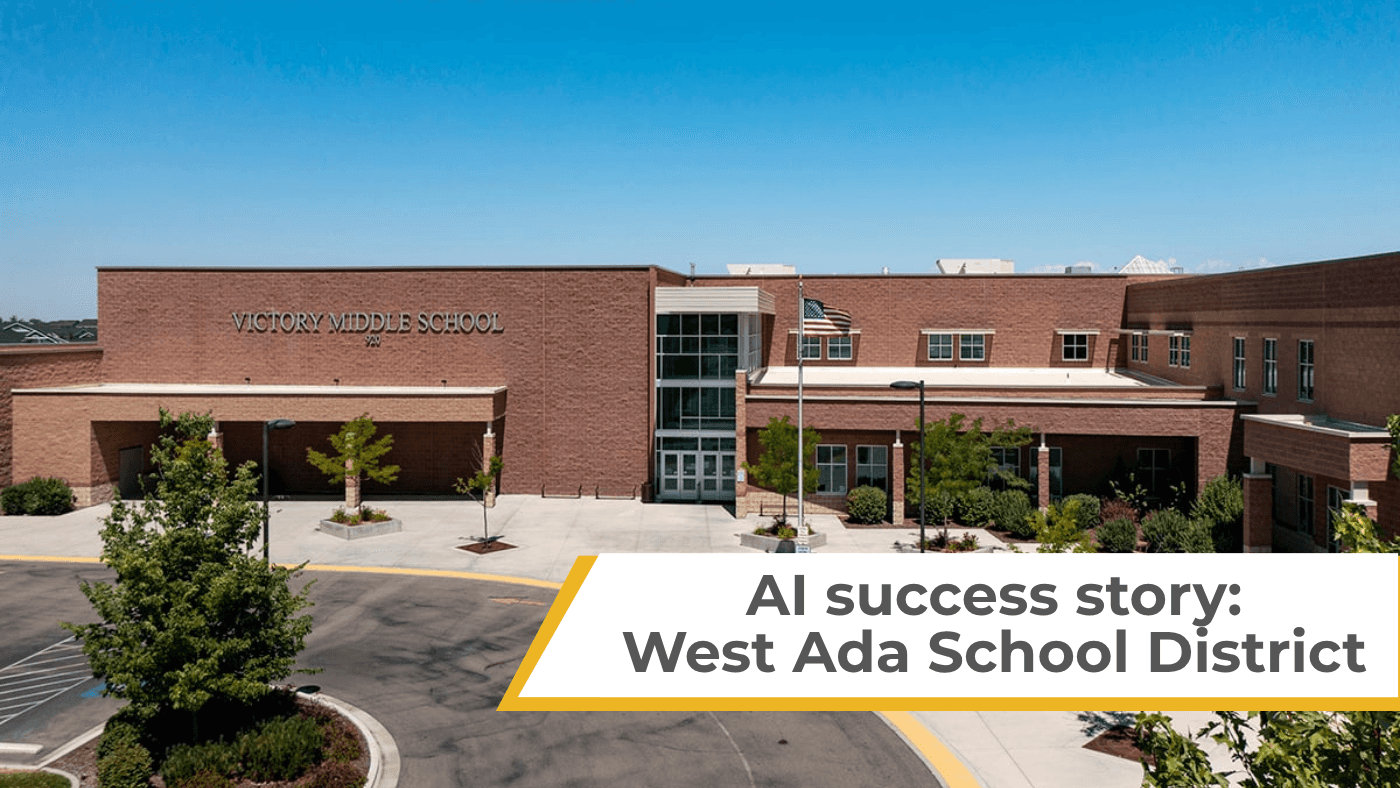
In the largest school district in Idaho, data is abundant — but finding the time to translate that data into meaningful classroom action is a constant challenge. For Aimee Larsen, Director of Data-Driven Response at West Ada School District, the goal has always been simple: turning 40,000 students' worth of information into practical instructional strategies.
With nearly 60 schools, West Ada had an abundance of data and countless “one-off reports” monitored by different people. But without a clear focus for the reporting, Larsen found, staff often experienced “data overload” — and teachers found it difficult to bridge the gap between raw data and specific instructional adjustments.
By integrating Connect AI into their workflow, West Ada has transformed their data strategy, moving from a landscape of disjointed reports to an environment of purposeful action.
“The AI tool dissolved the data literacy barrier. It gives our people the data they need, and puts them into action — purposeful action —in the classroom.”
—Aimee Larsen, Director of Data-Driven Response, West Ada School DistrictBridging the gap between data and instruction
The true value of AI in West Ada hasn't been in replacing human expertise, but in acting as an embedded, on-demand analyst. Larsen recently shared how the district used AI to support their Tier 1 instructional priorities around clarity, discourse, and explicit instruction.
When asked to analyze Spring 2026 IRI and i-Ready data for second-grade students against their end-of-first-grade performance, Connect AI provided immediate value. Rather than just returning numbers, it delivered:
- Clear Snapshots: A digestible summary of how assessments landed for that cohort.
- Actionable Recommendations: Specific instructional tweaks for teachers to improve clarity and student discourse in the classroom.
- Refined Focus: Helping teachers see the direct line between an assessment result and a specific move they can make in tomorrow's lesson.
What made this output valuable wasn't complexity — it was specificity. Teachers may struggle to connect the data in front of them to the actual instructional moves they make day to day, whether individually or in their PLCs. Connect AI closed that gap, producing “very actionable items they could reproduce in the classroom tomorrow.” It's a practical, provable way to translate district-level strategy into classroom-level instruction — and it's exactly the kind of shift Larsen says has changed how her staff engage with data.
Larsen describes how the AI tool is helping educators draw connections and analyze data more deeply than they were before.
A deliberate approach to implementation
Larsen’s strategy for success is “slow to go fast.”” Rather than rolling out the tool indiscriminately, West Ada is using a phased, deliberate approach designed to build confidence and capability among staff.
- Prioritize Leadership: They focus training first on building and district administrators, who then provide structured prompts to their teachers.
- Remove the Literacy Barrier: By using prompt banks and templates, Larsen helps educators overcome the intimidation factor. This structure ensures users don't have to guess how to ask for the right data.
- The “Analyst” Mindset: Larsen emphasizes that AI is a partner, not a replacement. Staff are trained to treat outputs with “cautious optimism,” verify the data, and think critically about the recommendations provided.
Building comfort with the tool is only half the equation. Larsen's team is just as focused on building the habits that make the data valuable in the first place — teaching staff to think critically about the AI results, iterate on their prompts rather than settle for the first output, and ask for information “down to the granular student level.” As Larsen explains, her team is using the tool to “take people into a place where they can see correlation and causation” and make a real difference for students.
The future of data strategy
For West Ada, AI isn’t about generating more paperwork; it’s about giving educators time back. By automating the heavy lifting of data analysis, Larsen’s team is empowering teachers to focus on what matters most: interventions and instructional design. Teachers, administrators, and specialists are all finding that “this just expedites our work.” By devoting time now to teach every staff member to engage with the data on their own, Larsen says, the district is actually “saving time in a lot of other ways that are meaningful to students.”
Learn more about the strategic addition of Connect AI into West Ada's data culture in our panel discussion, "How District Leaders Are Using AI to Answer Real Data Questions." Watch the full playback here.